Microorganisms - Campylobacter
septembre 28, 2026

Campylobacter in Food Manufacturing: Detection Methods, Testing Challenges, and Regulatory Compliance
Every day, food processors make critical decisions about product release, sanitation effectiveness, and process control based on microbiological testing data. Detecting pathogens quickly and accurately is essential to maintaining food safety while supporting operational efficiency.
This guide explores Campylobacter characteristics, common food sources, detection challenges, testing methods, regulatory expectations, and strategies for integrating Campylobacter testing into food safety programs.
What Is Campylobacter?
Campylobacter is a group of bacteria that can cause foodborne illness and is commonly associated with poultry, raw milk, untreated water, and other agricultural environments. Because Campylobacter contamination can occur throughout the food production process, it remains an important pathogen monitored by food manufacturers and food safety teams.
Campylobacter is a genus of Gram-negative, non-spore-forming, rod-shaped bacteria commonly associated with foodborne contamination.
Several Campylobacter species exist, but Campylobacter jejuni is responsible for the majority of food safety concerns within food manufacturing environments.
Key characteristics include:
- Gram-negative bacteria
- Non-spore-forming
- Curved or spiral rod morphology
- Highly motile
- Microaerophilic, requiring reduced oxygen conditions (approximately 3–5% oxygen) for growth
These biological characteristics influence how Campylobacter survives in production environments and create unique challenges for pathogen detection workflows. Unlike many other foodborne pathogens, Campylobacter requires specialized growth conditions, making recovery and detection more complex during routine testing activities.
Campylobacter jejuni: The Primary Food Safety Concern
Among Campylobacter species, Campylobacter jejuni is the organism most frequently targeted within food safety testing programs.
Food manufacturers often incorporate customized enrichment procedures and rapid molecular testing technologies to improve detection reliability.
Why Campylobacter is a Priority for Food Manufacturers
Campylobacter remains a significant concern for food manufacturers because of both its food safety implications and its potential impact on operations.
Regulatory Risk
Certain regulatory agencies maintain active Campylobacter verification programs, particularly within poultry processing facilities. Positive findings may trigger additional scrutiny, corrective actions, and verification activities.
Operational Risk
A presumptive positive result can lead to:
- Product holds
- Additional testing
- Root cause investigations
- Corrective action documentation
- Production delays
Brand and Supply Chain Risk
Contamination events can disrupt production schedules, affect customer confidence, and create downstream supply chain challenges.
Successful food safety programs aim to identify potential contamination issues before products leave the facility, helping protect both consumers and brand reputation.
Common Campylobacter Food Sources
Campylobacter can enter food production systems through multiple routes across the agricultural supply chain.
Common sources include:
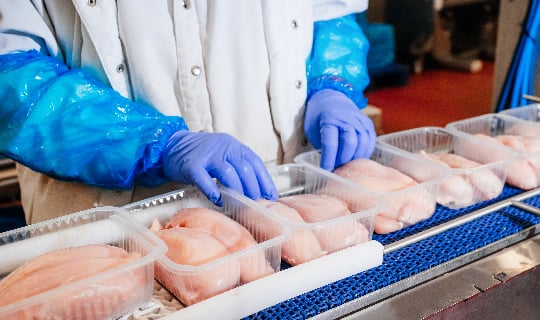
- Poultry and poultry products
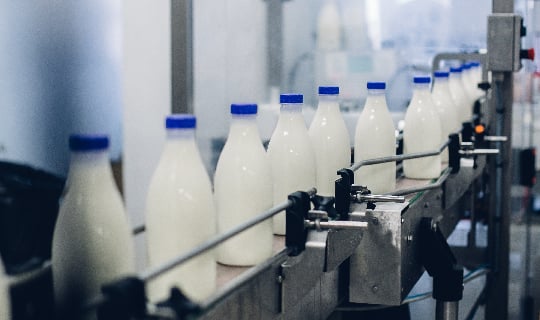
- Dairy products
- Pork products
- Untreated water
- Agricultural environments
- Contaminated raw ingredients
Understanding potential contamination pathways helps facilities develop targeted monitoring and corrective action programs.
Featured Industries


Campylobacter Testing Challenges and Detection Methods
One of the most significant testing challenges associated with Campylobacter is its biology.
Unlike many foodborne pathogens, Campylobacter is highly sensitive to environmental conditions and requires specialized growth requirements.
Challenges of Culture-Based Detection
Traditional culture methods remain widely accepted but present several limitations.
Because Campylobacter is microaerophilic, standard laboratory conditions do not reliably support growth. Testing often requires:
- Specialized enrichment broths
- Reduced oxygen incubation environments
- Multiple confirmation steps
- Extended testing timelines
In many cases, culture workflows require four to six days before final results are available.
Complex sample matrices and competing background microorganisms may further reduce testing efficiency, particularly in poultry, environmental, and raw ingredient samples.
Molecular Detection Methods
Molecular testing technologies overcome many of the limitations associated with traditional culture methods.
Benefits include:
- Faster time-to-results
- Improved sensitivity
- Greater specificity
- Better performance in complex sample matrices
- Streamlined testing workflows
By combining enrichment with molecular detection, laboratories can identify potential contamination more quickly and support faster decision-making throughout the production process.
Solutions such as the Neogen® Molecular Detection Assay 2 (MDA2) Campylobacter combine enrichment with molecular detection to support rapid pathogen testing programs.
Detection Method Comparison
| Detection Method | Time to Results | Sensitivity | Best Use Case |
|---|---|---|---|
| Culture-Based Methods | 4–6 Days | Moderate | Regulatory confirmation |
| Molecular Detection | Same day after enrichment | High | Routine pathogen screening |
Campylobacter Regulatory Requirements for Food Manufacturers
As environmental monitoring and pathogen verification programs continue to evolve under FSIS, HACCP, FSMA, and GFSI-benchmarked standards, manufacturers increasingly rely on rapid detection methods to improve testing efficiency, reduce hold times, and support timely decision-making.
Regulatory and HACCP Verification
The USDA FSIS maintains Campylobacter performance standards for poultry processors, while many facilities incorporate Campylobacter testing into HACCP verification activities. Testing data can support hazard analysis verification, corrective action decisions, trend analysis, and process control assessments.
Food Safety Certifications and Global Expectations
Certification schemes such as SQF, BRCGS, and FSSC 22000 often require microbiological verification programs that include pathogen monitoring and environmental control activities. As global food safety expectations continue to evolve, Campylobacter testing remains an important tool for demonstrating process control and supporting pathogen reduction efforts.
Integrating Campylobacter Testing Into Your Food Safety Program
An effective Campylobacter testing strategy should align with broader pathogen monitoring and preventive control programs. Sampling may include raw material receiving areas, poultry processing lines, environmental monitoring zones, equipment surfaces, finished products, and water systems.
Testing frequency should be based on factors such as product risk, production volume, historical results, regulatory expectations, and environmental monitoring data. Facilities should also account for seasonal trends, process changes, and emerging risks that could influence contamination potential.
To support continuous improvement, testing programs should include defined procedures for investigations, corrective actions, retesting, documentation, and trend analysis.
Neogen Pathogen Testing Solutions
Rapid and reliable Campylobacter detection can help manufacturers improve testing efficiency, reduce hold times, and strengthen food safety verification programs.
Neogen's pathogen testing solutions combine enrichment technologies and molecular detection capabilities to support modern food manufacturing environments.
These technologies help facilities strengthen pathogen testing workflows while supporting product integrity, operational efficiency, and regulatory compliance.
Frequently Asked Questions About Campylobacter
- What is Campylobacter in food safety testing?
Campylobacter is a foodborne pathogen commonly monitored in poultry and other food production environments as part of pathogen verification programs. - What foods are most commonly associated with Campylobacter?
Poultry is the food category most commonly associated with Campylobacter contamination, although raw milk, pork products, untreated water, and agricultural environments can also serve as sources. - Why is Campylobacter a concern in poultry processing?
Campylobacter is frequently associated with poultry production and is subject to regulatory performance standards and verification testing programs. - What are common Campylobacter food sources in food manufacturing?
Potential sources and routes of Campylobacter contamination include poultry, pork and other animal products, dairy products, untreated water, agricultural environments, and contaminated raw ingredients. - Why is Campylobacter difficult to detect using culture-based methods?
Campylobacter requires specialized low-oxygen growth conditions and may be difficult to recover from complex food matrices using traditional culture methods. - How do food manufacturers test for Campylobacter?
Manufacturers commonly use enrichment procedures, culture-based testing, and molecular detection technologies such as PCR-based assays. - How can molecular detection improve Campylobacter testing workflows?
Molecular detection methods provide faster results, improved sensitivity, and streamlined workflows that help manufacturers make quicker operational decisions.
Resources:
- https://www.fda.gov/food/guidance-regulation-food-and-dietary-supplements/food-safety-modernization-act-fsma
- https://www.fda.gov/food/hazard-analysis-critical-control-point-haccp/haccp-principles-application-guidelines
- https://www.fsis.usda.gov/policy/federal-register-rulemaking/federal-register-rules/pathogen-reduction-hazard-analysis-and
- https://www.fsis.usda.gov/policy/fsis-guidelines
- https://mygfsi.com/how-to-implement/recognition/certification-programme-owners/
Campylobacter produits de test
Catégorie : Sécurité alimentaire, Nourriture et boissons, Santé publique, Microbiologie, Agents pathogènes, Séquençage bactérien, Surveillance de l'environnement, Assainissement & Hygiène, Traitement de l'eau, Microorganismes