Reveal® Q+ vs. Reveal® Q+ MAX: Which Mycotoxin Testing Workflow Fits Your Operation?
September 28, 2026
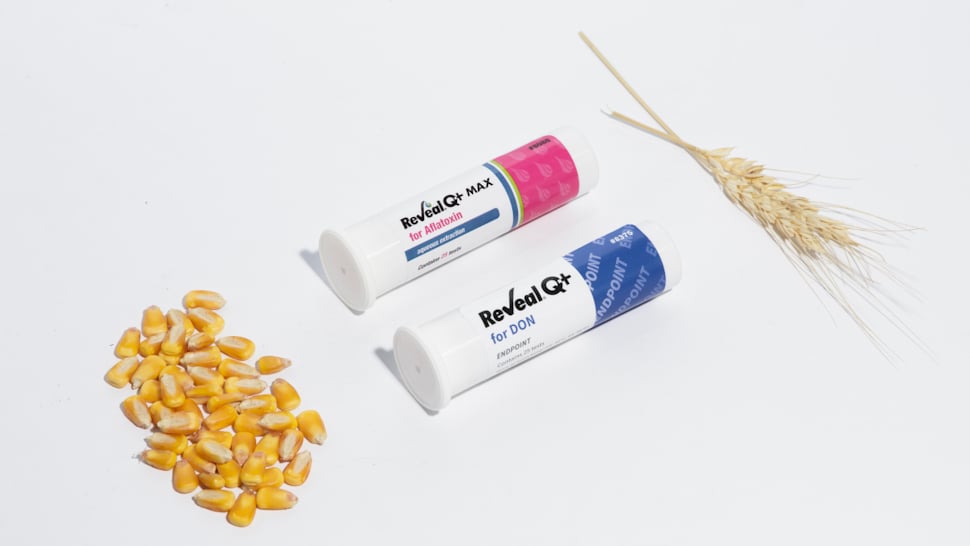
Mycotoxins—toxic compounds produced by molds that grow on grains, nuts, and other crops—are among the most significant natural contaminants in the food and feed supply. They can affect people and livestock through both acute exposure and long-term illness, and many remain stable through food processing. That makes early detection through reliable mycotoxin testing an important part of protecting grain, feed, and finished products.
For teams screening grain and feed, the question often is not whether to test, but which workflow can deliver fast, accurate, and practical results. This article compares Reveal® Q+ and Reveal® Q+ MAX to help testing teams choose the mycotoxin testing workflow that best fits their operation.
Fast, Quantitative Mycotoxin Testing for Grain and Feed
Reveal Q+ and Reveal Q+ MAX are quantitative lateral flow tests that help teams measure mycotoxins without the time and complexity of many traditional laboratory workflows. Used with a compatible Neogen reader, they provide numerical results that can be reviewed and stored as part of the testing process.
The difference between the two test types is based on how the sample is prepared before testing. Reveal Q+ methods may use test-specific solvent extraction, while Reveal Q+ MAX is designed around Neogen’s common water-based extraction approach.
Reveal Q+
Rapid, quantitative lateral flow testing with established test-specific preparation procedures.
Reveal Q+ MAX
Rapid, quantitative lateral flow testing designed around a common water-based extraction for multiple mycotoxins.
The Choice
The best fit depends on the mycotoxin, commodity, validated method, and the way your team wants to organize testing.
What Makes Reveal Q+ MAX Different?
For teams that test the same sample for several mycotoxins, preparation can become repetitive. The Reveal Q+ MAX workflow is designed to help reduce that burden by using a common water-based extraction across the MAX line. When applicable method requirements are met, one prepared sample extract can support testing for multiple mycotoxins.
| Step 1 | Step 2 | Step 3 | Step 4 | Step 5 |
|---|---|---|---|---|
| Grind the sample. | Add water and MAX extraction material. | Shake. | Filter. | Test the prepared extract. |
The Reveal Q+ MAX line now includes fumonisin, expanding the portfolio to six major mycotoxins supported by a common water-based extraction approach. For applicable samples and methods, this gives testing teams a more streamlined way to manage multi-mycotoxin analysis.
Why Reveal Q+ MAX Fumonisin Matters for Corn Testing
Fumonisins are closely associated with corn and corn-based ingredients. Certain Fusarium molds produce fumonisins, and these molds commonly infect corn, especially when hot, dry weather is followed by periods of high humidity.
Because corn is widely used across food and feed production, reliable fumonisin testing is a core part of many grain monitoring programs. Reveal Q+ has already provided a quantitative option for fumonisin testing in corn products.
Neogen’s published Reveal Q+ for Fumonisin procedure uses a 65% ethanol extraction before testing. The MAX option gives teams another validated path by bringing fumonisin into the common water-based workflow used across the Reveal Q+ MAX natural toxins portfolio.
In practice, teams have more than one path to fumonisin results. A facility that is comfortable with its existing Reveal Q+ Fumonisin workflow can continue using that method where it fits. A facility looking to simplify preparation across several mycotoxin tests can evaluate whether Reveal Q+ MAX is a better match for its commodities and testing program.
Reveal Q+ vs. Reveal Q+ MAX: A Simple Comparison
| If your priority is... | Consider | Why |
|---|---|---|
| Following an established test-specific solvent extraction. | Reveal Q+ | Reveal Q+ includes quantitative methods with their own published preparation procedures, including the current fumonisin method. |
| Using water-based extraction. | Reveal Q+ MAX | MAX uses a common aqueous extraction approach and is designed to reduce the need for hazardous extraction materials. |
| Testing one sample for several mycotoxins. | Reveal Q+ MAX | Neogen describes the common MAX extraction as supporting multiple mycotoxin tests from one prepared sample extract. |
| Testing a particular commodity. | Check the validated method first | Neogen's validated and verified commodities list shows that method suitability and preparation can vary by commodity. |
Six Mycotoxins, One Connected Testing Workflow
Reveal Q+ MAX supports a common extraction strategy across six major mycotoxins: aflatoxin, DON, ochratoxin, T-2/HT-2, zearalenone, and fumonisin. When the applicable methods and commodities align, this approach can help grain and feed testing teams create a more consistent mycotoxin testing workflow.
That consistency can be valuable in busy testing environments. With fewer preparation changes from test to test, teams can simplify training, reduce repeated setup steps, and focus on generating results that support timely decisions. As always, the final workflow should follow current Neogen instructions for the specific product and commodity being tested.
Choosing the Right Mycotoxin Testing Workflow
If your team typically runs a single mycotoxin test and already has a validated Reveal Q+ method that fits your process, that established workflow may be the right choice. Reveal Q+ remains part of Neogen’s quantitative lateral flow testing portfolio for mycotoxin analysis.
If your operation routinely screens one sample for several mycotoxins, or if you want to simplify preparation with water-based extraction, Reveal Q+ MAX may be a better fit. Its common extraction strategy can help reduce repetitive preparation steps, while the addition of fumonisin brings this workflow to an important toxin for corn-focused testing programs.
Want a closer look at the extraction choice?
Read our companion article, Water-Based vs. Solvent-Based Extraction for Mycotoxin Testing, to learn how each approach can affect day-to-day sample preparation.
Category: Food Safety, Milling & Grain, Mycotoxins, Reveal®