New World Screwworm: Reducing Your Risk
The presence of New World Screwworm in the U.S. has triggered a coordinated response from USDA, state agencies, and livestock producers to combat this devastating pest. Livestock producers and animal owners serve as a critical frontline, routinely checking animals for wounds, applying approved insecticide treatments as directed, and immediately reporting suspicious infestations to a veterinarian or state animal health official. Swift action and open communication remain the most effective tools in controlling the spread of New World Screwworm.
Neogen® Broadens Availability of FIFRA Section 2(ee) Recommendations
Neogen® has expanded the availability of FIFRA Section 2(ee) recommendations for Prozap® Insectrin X Concentrate and Prozap® Screw Worm and Ear Tick Aerosol as part of New World Screwworm response efforts. These recommendations are available in the states listed below, giving ranchers, livestock producers, and horse owners additional tools to incorporate into broader fly management and wound protection programs.
What Is New World Screwworm?
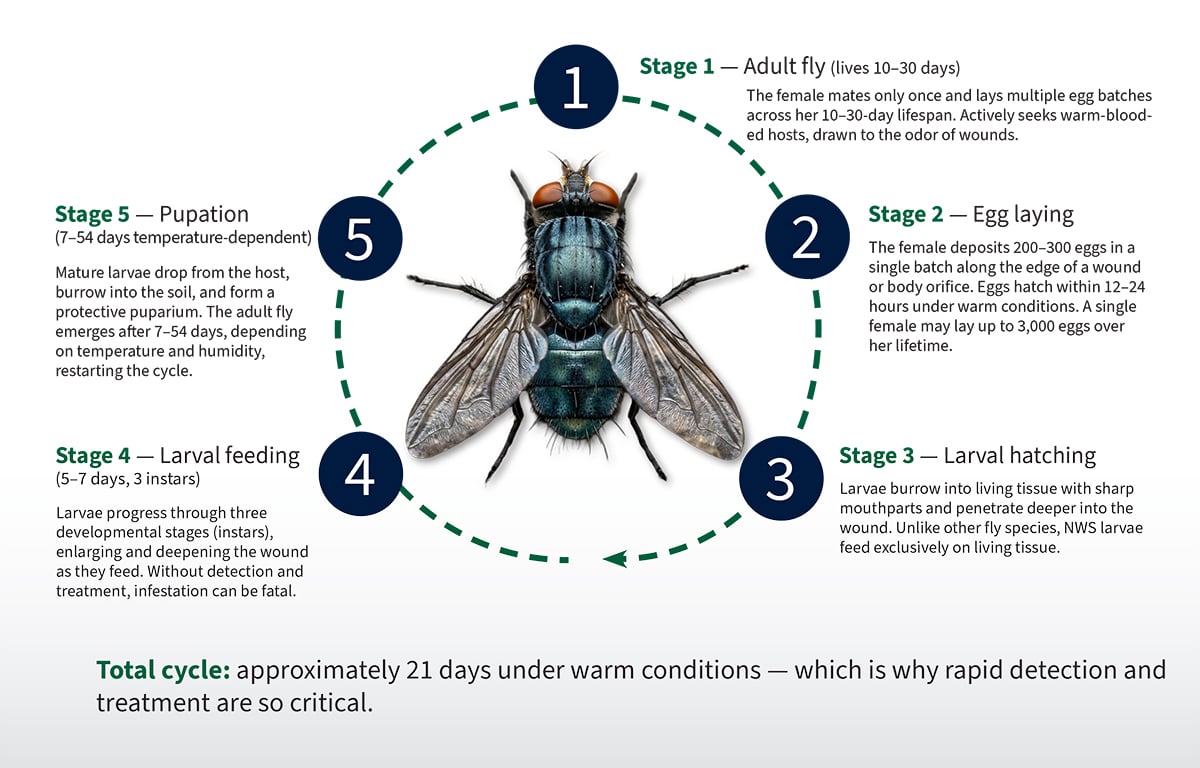
New World Screwworm (NWS) is a parasitic blow fly whose larvae feed exclusively on the living tissue of warm-blooded animals — and after more than 60 years, it has returned to U.S. soil.
On June 3, 2026, USDA-APHIS confirmed the detection of NWS in a bovine in Zavala County, Texas — the first confirmed case in the United States in decades. Since the initial detection, USDA-APHIS has confirmed additional cases.
The pest had been advancing steadily northward:
- 2022 — NWS began moving through Central America and into Mexico
- 2025–2026 — Case numbers climbed steadily toward the southern U.S. border
- June 2026 — First confirmed U.S. detection in decades (Zavala County, TX)
The danger lies in how the larvae behave- burrowing deeper into flesh and consuming muscle and tissue from the inside, often before an infestation is identified. Even a minor break in the skin is enough to trigger myiasis, making early detection both critical and challenging.
Leading veterinary parasitologists have warned that the confirmed detections likely signal the beginning of the parasite's reestablishment in the United States, not isolated incidents, and that the fight to eradicate it again could stretch across several years.
What is a FIFRA Section 2(ee) Recommendation?
Under federal pesticide law, a product's label strictly governs how and where it can be used. A FIFRA* Section 2(ee) Recommendation provides a pathway for recommending an existing registered product for uses not explicitly detailed on the label — without requiring a full label revision. States can adopt these recommendations to quickly address emerging threats, making it a critical tool for rapidly mobilizing effective pest control options in response to outbreaks like New World Screwworm.
To help livestock producers and horse owners respond quickly to the growing NWS threat, Neogen® has pursued FIFRA Section 2(ee) recommendations for select products across the United States. We are working on adding more FIFRA Section 2(ee) in other states and will provide updates as they become available.
*FIFRA refers to the Federal Insecticide, Fungicide, and Rodenticide Act. These recommendations are made as permitted under FIFRA Section 2(ee). Users must be in possession of the applicable recommendation at the time of pesticide application and comply with all product label directions and applicable state requirements.
Control Measures for Livestock
A strong NWS prevention strategy starts with comprehensive fly control and proactive wound management.
Key practices include:
- Multi-modal insect control — Combine on-animal insecticides with area-based treatments in barns, corrals, and working facilities.
- Proactive wound management — Treat any wound, no matter how small, to prevent egg-laying flies from gaining a foothold.
- Routine observation — Regularly inspect animals to enable early detection and timely intervention before larvae can establish in a wound.
On-Farm Fly Control Measures
As with any disease threat, prevention pays the biggest dividends. Reducing exposure to NWS begins with strong fly control and proactive management.
1. Use a multi-modal insect control program.
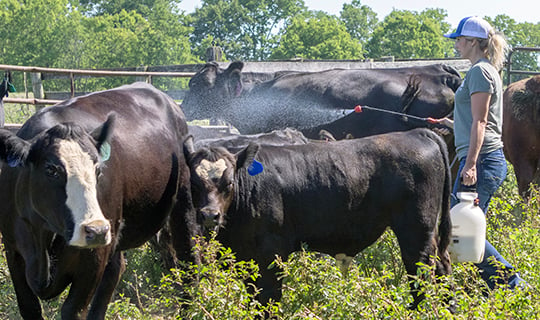
On-animal insecticides play an important role, but they shouldn’t be the only tool in the toolbox. Incorporate area-based control as well—treat barns, corrals, calving areas, and working facilities to reduce fly breeding and resting sites. Always follow label directions for application timing, dosage, and re-treatment intervals.
2. Treat and protect open wounds immediately.
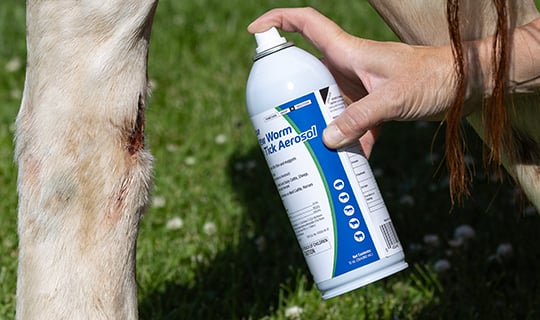
Any wound, even small ones, can attract egg-laying flies. With NWS, rapid intervention is critical. Apply screwworm treatments as soon as wounds occur and monitor healing. Products like Prozap® Screw Worm and Ear Tick Aerosol provide protection from flies and kill maggots, helping to control these pests and prevent damage. Think beyond accidental injuries—plan wound care timing and treatment for branding, dehorning, castration, DNA sampling, and calving.
3. Maintain diligent observation of livestock.
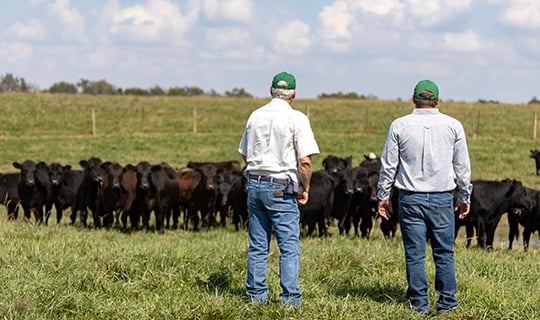
Early detection is one of the most powerful prevention tools. Routinely inspect animals, especially young and recently worked cattle for wounds, signs of irritation, or abnormal behavior. Catching issues early allows for timely treatment, which prevents larvae from becoming established.
Where to Buy New World Screwworm Solutions
National Distributors / Online Retailers
Animal Health International
Jeffers
MWI Animal Health
PBS Animal Health
Tractor Supply Co
Valley Vet Supply
Texas Dealers
Agri Tech Animal Health
Marlin, TX
Atwoods Ranch & Home Goods
Bar J Vet Supply
Lott, TX
HF and C
Last Chance Feed & More
Cleveland, TX
Murdoch's Ranch & Home Supply
Producers Cooperative Association
Spitzer Animal Health
Abilene, TX