Neogen® Petrifilm® Bacillus cereus Count Plates: A New Benchmark for Food Testing
März 06, 2026
What is Bacillus cereus and Why Does it Matter?
The Bacillus cereus senso lato group is a group of gram-positive bacteria, originating from soil and water, and is commonly found in dried, raw and processed food. Able to form spores that attach to surfaces and form biofilms, the bacteria can survive unfavourable conditions, like heating, freezing or drying, which helps them survive food processing. For that reason, they remain a high risk for food manufacturers.
More than 20 species of Bacillus cereus are included in the senso lato group, including B. thuringiensis, B. mycoides, B. pseudomycoides, B. cytotoxicus and of course Bacillus cereus.
Not only does Bacillus cereus have the ability to produce spores, but it also has the capacity to produce toxins, which are heat-stable and resistant to cooking. When ingested in high quantities, B. cereus toxins cause foodborne disease, characterised by emetic (vomiting) or enteric (diarrheal) syndromes, which occur one to five hours after ingestion of contaminated food.
In 2024, Bacillus cereus toxins ranked as the 3rd most common identified cause for human foodborne illnesses in the European Union (1), and 2026 has already seen 36 cases of poisoning in the UK alone (2). The year began with multiple large food processors recalling infant formula due to the presence of cereulide, a toxin produced by some strains of Bacillus cereus (3).
The Regulatory Landscape of B. cereus Testing in Food
In the European Union, Bacillus cereus is a mandatory controlled public health criterion for dried infant formulae and dried dietary foods for special medical purposes intended for infants below six months of age. Additionally, it is controlled in food substances such as dairy, ready-to-eat, ready-to-reheat and fresh or frozen fruit and vegetable products.
The standard method for Bacillus cereus testing differs according to the geographical and regulatory requirements of the market where the food is sold.
- EU: ISO 7932: 2004 Microbiology of food and animal feeding stuffs – Horizontal method for the enumeration of presumptive Bacillus cereus – Colony count technique at 30°C (3)
- USA: FDA BAM Chapter 14 method for Bacillus cereus detection and enumeration (4)
Standard testing relies on agar-based traditional culture media methods, which include antibiotic preparations and multiple supplement additions.
The new Neogen® Petrifilm® Bacillus cereus Count Plate has been externally validated as an equivalent alternative method to both standards following ISO 16140-2 and AOAC validation protocols, tested on 120 items within the broad range of food categories.
Bacillus cereus Testing Made Easier with Neogen Petrifilm
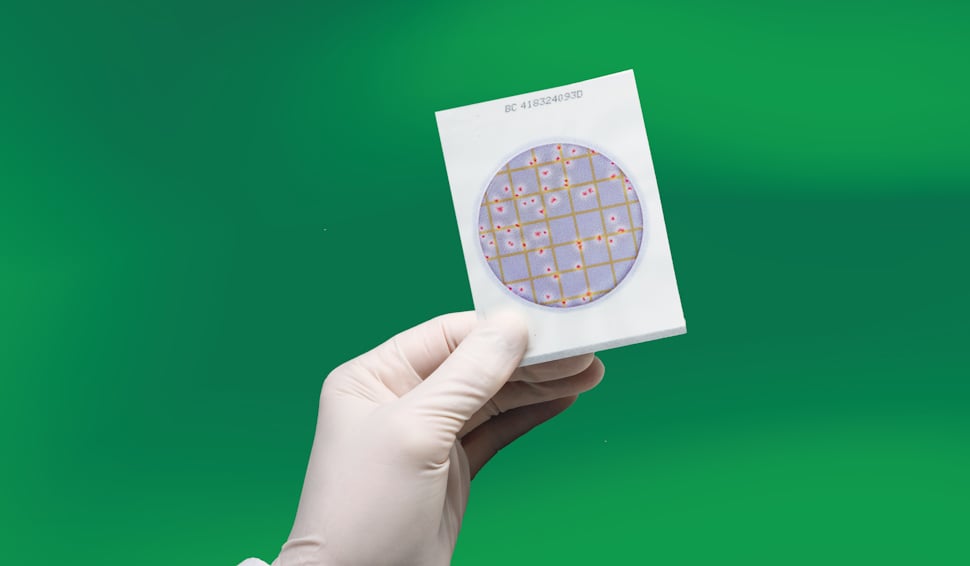
Neogen’s new Petrifilm Bacillus cereus Count Plate is a selective, dry-film plate method that rapidly and accurately enumerates the Bacillus cereus senso lato group of bacteria in a broad range of food and animal feed.
ISO 16140-2 validated according to MicroVal with one plate protocol; validation results show that the rapid, alternative method performs equivalently to the reference standard, while providing a streamlined test that helps increase efficiency and reduces waste.
Download the validation report (2024LR132) here.
Neogen Petrifilm: How Does It Work?
Our Bacillus cereus Count Plates contain proprietary nutrients, selective agents and chromogenic indicators, allowing specific and selective enumeration and easy identification of B. cereus.
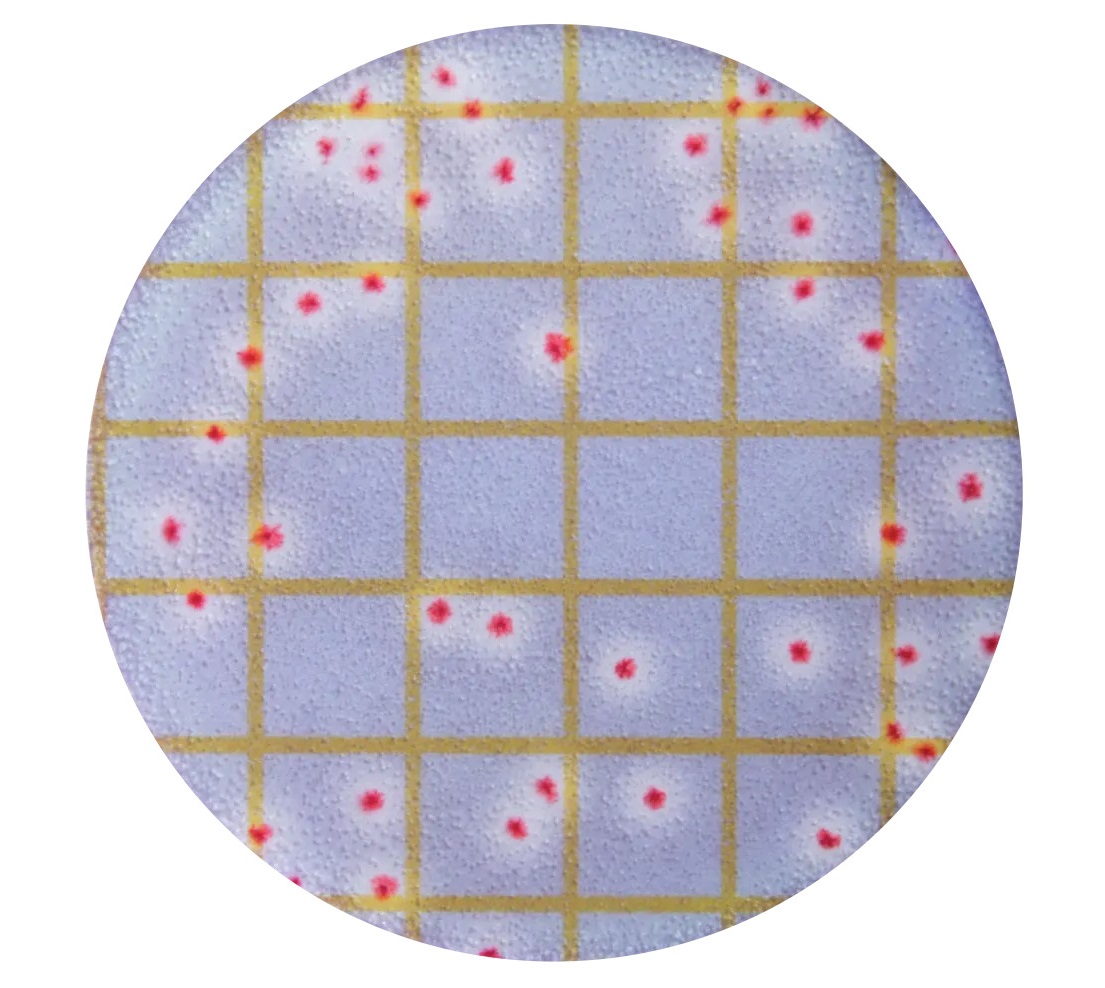
Typical Bacillus cereus colonies are red-violet with the presence of a white zone.

Sample Preparation

Plate Inoculation

Plate Incubation

Result Interpretation
Benefits for Food Manufacturers and Food Testing Laboratories
 | Results in as little as 20 hours - allowing for faster product release or production changes |
 | Distinctive colony colouration for easy interpretation - reducing the risk of human error |
 | Ready- to-use format - eliminating the time and cost required for agar preparation while providing QC consistency |
 | Compact and easy to store or incubate - reducing space requirements in the lab |
 | Fully validated according to ISO 16140-2, AOAC OMA and AOAC PTM validation protocols - providing a test you can trust |

Simple
Ready-to-use. No antibiotics or hazardous handling

Comprehensive
Covers the full B. cereus group, including B. cytotxicus

Complete
Directly counts B. cereus with no confirmation steps
Ready to find out more about Bacillus cereus testing and how Neogen’s Petrifilm Bacillus cereus Count Plate can benefit your facility? Check out the full range or get in touch below.
References
- Foodborne outbreaks report | EFSA
- UK Health Security Agency research and analysis HPR volume 20 issue 1: news (29 January and 5 February 2026)
- European Centre for Disease Prevention and Control, Weekly threats report (CDTR) week 5, 24-30 January 2026
- International Organization for Standardization 7932:2004 Microbiology of food and animal feeding stuffs – Horizontal method for the enumeration of presumptive Bacillus cereus – Colony-count technique at 30°C
- U.S. Food and Drug Administration Bacteriological Analytical Manual, Chapter 14, Bacillus cereus (2020) https://www.fda.gov/food/laboratory-methods-food/bam-chapter-14-bacillus-cereus [accessed September 2024]
Kategorie: Lebensmittelsicherheit, Mikrobiologie, Petrifilm®