Industry Guides for Environmental Monitoring and Risk-Based Food Safety
July 22, 2026
Two Resources. One Smarter Approach to Managing Risk.
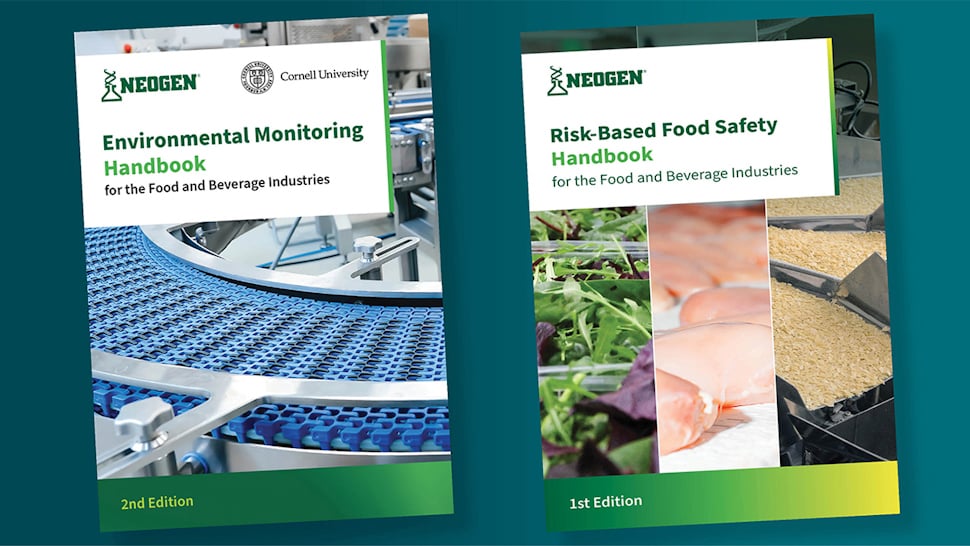
The updated 2nd Edition of the Neogen® Environmental Monitoring Handbook, developed in partnership with Cornell University and global food safety experts, provides clear, actionable guidance for building and maintaining an effective Environmental Monitoring Program. The new Neogen® Risk-Based Food Safety Handbook, written in partnership with Dr. Fernando Sampedro of the University of Minnesota, helps your team take a deeper, more structured approach to risk—so you know exactly which questions to ask and how to build a program that fits your specific operation. Think of it as the essential starting point before developing your environmental monitoring program, or when reviewing your food safety program for risk-based decisions.
Building your programs begins with understanding risk.
Food safety programs are evolving, and so are expectations from regulators and auditors. Staying ahead today means more than collecting data—it means understanding risk and acting on it with confidence. Download the Neogen Environmental Monitoring Handbook paired with the Neogen Risk‑Based Food Safety Handbook to gain both the practical execution guidance and the strategic framework needed to manage risks proactively. Together, these resources help food and beverage manufacturers move from routine testing to informed, risk‑based decision‑making that supports audit readiness, continuous improvement, and brand protection.
What you'll get in each handbook:
| Environmental Monitoring Handbook | Risk-Based Food Safety Handbook | |
|---|---|---|
| Focus | How to execute and optimize your EMP | Tools and procedures to identify, assess, and control food safety hazards |
| Approach | Practical - sampling guidance, testing methods, root cause analysis | Strategic - risk-based frameworks, control validation, decision making |
| Key Topics | ATP monitoring, indicator organisms, spoilage, pathogens, allergens, data management | Hazard identification, risk categorization, targeted sampling plans, continuous improvement |
| Developed With | Cornell University and 20+ global food safety experts | Developed with Dr. Fernando Sampedro of the University of Minnesota and Neogen food safety experts. |
| Best For | QA managers, sanitation supervisors, microbiologists, plant operations | Food safety directors, FSQA leadership, regulatory and compliance teams |
Together, these resources create a practical framework that strengthens food safety systems across operations.
Why environmental monitoring matters.
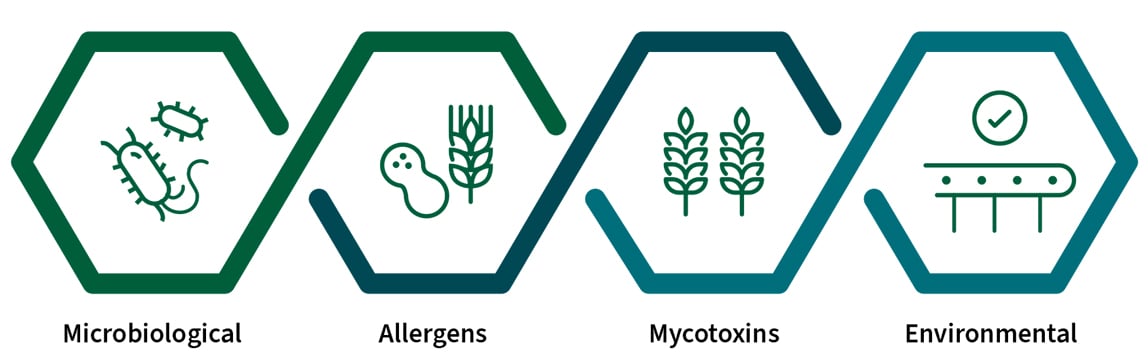
Effective environmental monitoring programs can help reduce risk of recalls, extend product shelf life, streamline production, and increase customer satisfaction. A holistic approach should address the relevant hazards and quality risks in the processing area:

ATP testing is verifying effectiveness of cleaning procedures with data analysis capabilities

Address microbial spoilage and highlight contamination risks
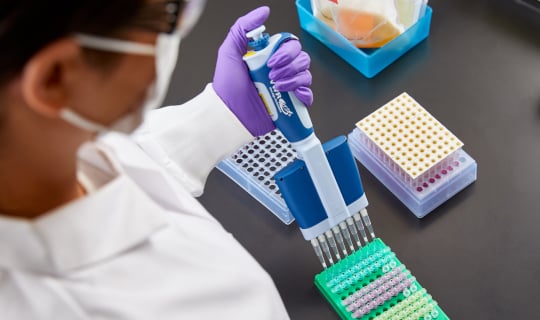
Identify and detect pathogens in environmental harborage sites
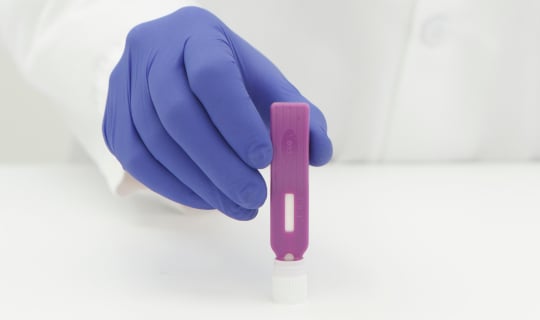 Verify absence of measurable allergenic protein on equipment and surfaces
About the authors.
Neogen Environmental Monitoring Handbook
The Neogen Environmental Monitoring Handbook was created in collaboration with Cornell University and food safety experts from around the world. With contributions from over 20 different authors and editors, this comprehensive guide offers a framework that can be tailored to help a wide range of food and beverage manufacturers implement an effective environmental monitoring program suited to their specific needs.
Neogen Risk-based Food Safety Handbook
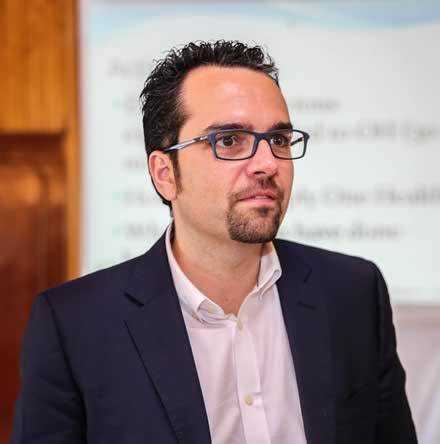
Dr. Fernando Sampedro
Dr. Fernando Sampedro is an international consultant and affiliated faculty member at the University of Minnesota and University of Laval. His work focuses on food safety risk analysis tools and capacity building across the global food supply chain. He has authored 58 manuscripts and book chapters and delivered courses and workshops worldwide. His experience spans Latin America, East Africa, and Southeast Asia. In addition, Dr. Sampedro has served as a consultant for organizations including USAID, USDA, FAO, WHO, and the IAEA, supporting the development of risk-based food inspection and surveillance programs.
Category: Handbooks, Food & Beverage, Environmental Monitoring