Food Safety Data Without Risk Context Is Just Information
July 22, 2026
Food manufacturers generate more food safety data than ever before—environmental results, finished product testing, hygiene verification, raw material screenings, and supplier documentation. Yet despite that effort, unexpected findings still occur. Trends are identified too late. Corrective actions feel reactive. Audits become more stressful than they should be. The issue is rarely a lack of testing. More often, it is a lack of risk context.
When food safety systems are not grounded in a clear, risk‑based framework, data becomes fragmented. Results are reviewed in isolation. Programs are managed in silos. Teams can point to activity, but often struggle to explain—not just what they are doing, but why it matters. This challenge is especially visible in environmental monitoring. This challenge is especially visible in environmental monitoring without a clear, risk‑based framework to guide it. Without that lens, even well‑run programs can fail to focus attention where risk actually exists.
That is the purpose of the Neogen Risk-Based Food Safety Handbook. It helps food manufacturers move beyond checklist‑driven programs toward a structured, holistic approach that identifies what risk truly exists, how it moves through operations, and how controls should be prioritized across the entire production system.
Why Risk‑Based Food Safety Requires a Holistic View
Risk does not live in a single test method or program. It moves through ingredients, people, equipment, air, water, and finished products, often in ways that are connected but not always visible.
Limiting food safety management to pathogen testing alone can leave critical gaps. While pathogens are a serious concern, they are not the only risks manufacturers must manage. Mycotoxins can be introduced through raw materials. Allergen cross‑contact can occur through shared equipment or traffic patterns. Inadequate hygiene practices can elevate microbiological risk long before a pathogen is detected. Poorly designed sampling and collection plans can miss emerging trends entirely.
A risk‑based approach brings all of these elements together into a single, defensible framework that helps teams understand how hazards are identified across and sampling plans are optimized across the operation.
Moving Beyond Finished Product Testing
Rather than organizing food safety programs by department or test type, risk‑based systems are built around the points where risk enters, persists, or escalates. The Neogen Risk-Based Food Safety Handbook focuses on three interconnected stages that help manufacturers manage food safety risks more effectively.
1. Ingredient Risk
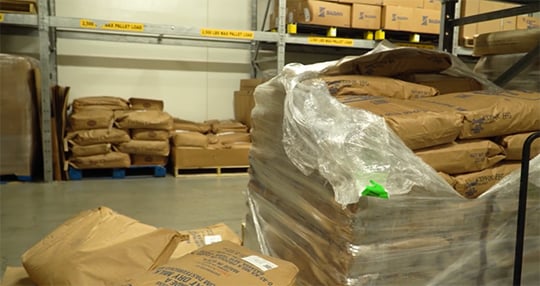
Ingredients are often the earliest and most variable source of risk. Raw materials may introduce microbiological hazards, mycotoxins, allergens, or chemical contaminants that are frequently influenced by supplier practices, geography, seasonality, and storage conditions.
A risk‑based approach evaluates:
- Supplier risk profiles and historical performance
- Incoming material testing strategies
- Probability of detecting a contaminated lot
- How ingredient risks change based on formulation or use
Rather than testing everything equally, risk‑based systems help focus controls where exposure is greatest and consequences are highest.
2. Environmental Risk

Environmental monitoring plays a critical role, but it is effective only when it reflects operational reality. Facilities evolve, equipment is added or modified, traffic patterns shift, and sanitation practices change.
Without risk‑based guidance, environmental monitoring programs can become static routines rather than dynamic risk controls. The issue is not always the execution of swabbing or testing; it is the absence of a framework that explains why certain areas, frequencies, and organisms matter more than others.
Risk‑based environmental management considers:
- How hazards move through people, equipment, air, and water
- Where hygiene failures are most likely to occur
- The role of ATP and indicator organisms in verifying control
- How sampling locations, frequency, and targets align with true exposure
This ensures environmental monitoring is not just well executed, but well targeted.
3. Finished Product Risk

Finished product testing is often treated as the final line of defense, but a risk‑based framework clarifies its role within the broader system. Finished goods testing should confirm that upstream controls are working and should not compensate for gaps earlier in the process.
Risk‑based finished product strategies address:
- Which hazards are most likely to impact final product
- When product testing adds value versus reassurance
- How results should be interpreted in the context of ingredient and environmental data
When aligned correctly, finished product testing can support confidence rather than creating false security.
Where Risk‑Based Thinking Meets Practical Execution
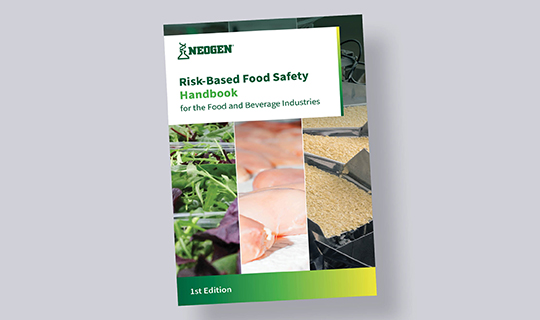
Risk‑based decision‑making does not replace existing food safety programs—it strengthens them. Tools like the Neogen Environmental Monitoring Handbook provide clear guidance on how to execute programs correctly. The Neogen Risk-Based Food Safety Handbook explains how to determine where, when, and why those programs matter most.
Together, they can help organizations mitigate the risk of testing programs, especially environmental monitoring, from becoming disconnected activities. Instead, they help transform food safety into an integrated management system that evolves as operations change and risks shift.
Turning Data Into Action and Confidence
Collecting results is not the challenge; knowing how to act on them is. When risk context is missing, positive results can feel either alarming or easy to dismiss. Corrective actions often default to more testing or repeated cleaning rather than addressing root causes.
Risk‑based systems change that dynamic by giving data meaning. Food safety risk is expressed as a combination of exposure and severity (RISK = EXPOSURE × SEVERITY; see Section 2.1.1 of the manual). Results are interpreted through these factors, helping teams prioritize actions based on where risk is highest.
That clarity builds confidence where it matters most. On the production floor, teams understand why controls exist and how daily behaviors influence risk, improving consistency and reducing reliance on institutional knowledge. In audits and inspections, confidence comes from explanation—not paperwork. Facilities can clearly articulate why programs are structured the way they are, how risks are prioritized, and how data drives decisions.
One Framework for Managing Food Safety Risk

Food safety is not managed by testing alone. It is managed through understanding of risk, movement, and priority.
The Neogen Risk-Based Food Safety Handbook provides a guide to a holistic and proactive approach to a risk-based food safety management system. Supported by practical execution tools, it helps manufacturers move from reactive testing to proactive control.
Because in today’s food manufacturing environment, data is everywhere. Risk insight is what makes it powerful.
Download the Neogen Risk-Based Food Safety Handbook to help you build a stronger, more defensible approach to managing food safety risk.
Category: Food Safety, Environmental Monitoring