From Compliance to Confidence: How the Environmental Monitoring Handbook Empowers Food Safety Professionals
August 20, 2026

A Firsthand Perspective from a Food Safety Professional
When Mónica Morales — QA Manager and Laboratory Director at Alimentos Congelados, S.A. (ALCOSA) in Guatemala — picked up the Second Edition of the Neogen® Environmental Monitoring Handbook, she didn't just find another technical manual. She found what she calls "a highly valuable resource for food safety and quality professionals" — one that "brings together key information for the design, implementation, and strengthening of environmental monitoring programs, presenting technical concepts in a clear, practical manner supported by the expertise of specialists in the field."
Her feedback highlights the value the handbook can provide to food safety professionals and how its practical approach resonates with users seeking to strengthen their environmental monitoring programs.
What Makes the 2nd Edition Stand Out?
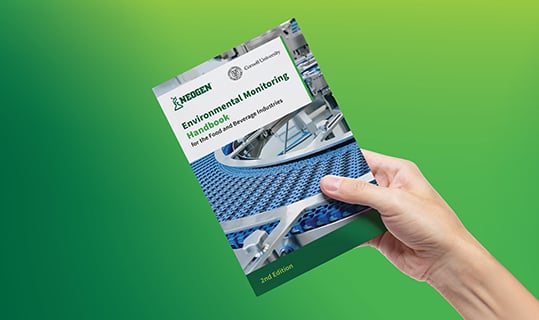 Released on World Food Safety Day (June 5, 2025), the Neogen Environmental Monitoring Handbook is a comprehensive resource designed to help food and beverage manufacturers strengthen food safety programs and reduce contamination risks. The updated guide introduces critical new insights on validating risk-based controls, conducting root cause analysis, and leveraging data for continuous improvement, providing food safety professionals with practical guidance and industry insights to help strengthen their environmental monitoring programs.
Morales highlights these exact elements as the most impactful:
"Among the aspects I value most in this new version are its focus on continuous improvement, the incorporation of root cause analysis, the validation of prerequisite programs, and the strategic use of data for decision-making."
The Second Edition builds on the success of its predecessor with three new chapters covering:
- Using environmental monitoring to validate non-process controls and prerequisite programs
- Best practices for conducting root cause analysis after contamination events
- Data management and utilization in environmental monitoring programs
These additions move environmental monitoring from a reactive, check-the-box exercise to a proactive, strategic management tool — exactly what Morales describes when she says the handbook "helps elevate environmental monitoring beyond regulatory compliance, turning it into a management tool for risk prevention and control."
A Holistic Approach to Food Safety
Effective environmental monitoring programs can help reduce risk of recalls, extend product shelf life, streamline production, and increase customer satisfaction. The guide encourages a holistic approach addressing all relevant hazards:
- ATP testing — data trending enables verification of effective cleaning procedures
- Microbial monitoring — addresses microbial spoilage and highlights post-processing contamination risks
- Pathogen detection — identifies and detects pathogens in environmental harborage sites
- Allergen verification — verifies absence of measurable allergenic protein on equipment and surfaces
Expert-Driven, Globally Sourced
 The handbook was developed in partnership with Cornell University's College of Agriculture and Life Sciences (CALS) and 20+ global experts, providing a framework for building and enhancing environmental monitoring programs. With contributions from over 20 different authors and editors, this comprehensive guide offers a framework that can be tailored to help a wide range of food and beverage manufacturers implement an effective environmental monitoring program suited to their specific needs.
For Beginners and Veterans Alike
Morales captures the handbook's broad appeal perfectly:
"Without a doubt, it is an excellent reference both for those who are new to the topic and for those looking to strengthen and mature their food safety programs."
The guide covers methods to identify and proactively manage risks in your facility, helping to drive continuous improvement and ensure brand protection. Whether you're building a program from scratch or optimizing an existing one, this handbook meets you where you are.
Advancing a Culture of Continuous Improvement
As Morales expressed:
"Thank you to Neogen for making this type of technical resource available to the industry, promoting a culture of continuous improvement and food safety."
The release of the Second Edition underscores Neogen's dedication to advancing global food safety. As Cari Lingle, Senior Manager of Global Learning Experience at Neogen, explained: "This handbook offers practical, expert-driven guidance to help manufacturers strengthen their monitoring strategies, validate and verify sanitation practices, and elevate food safety with confidence."
Download Your Copy Today
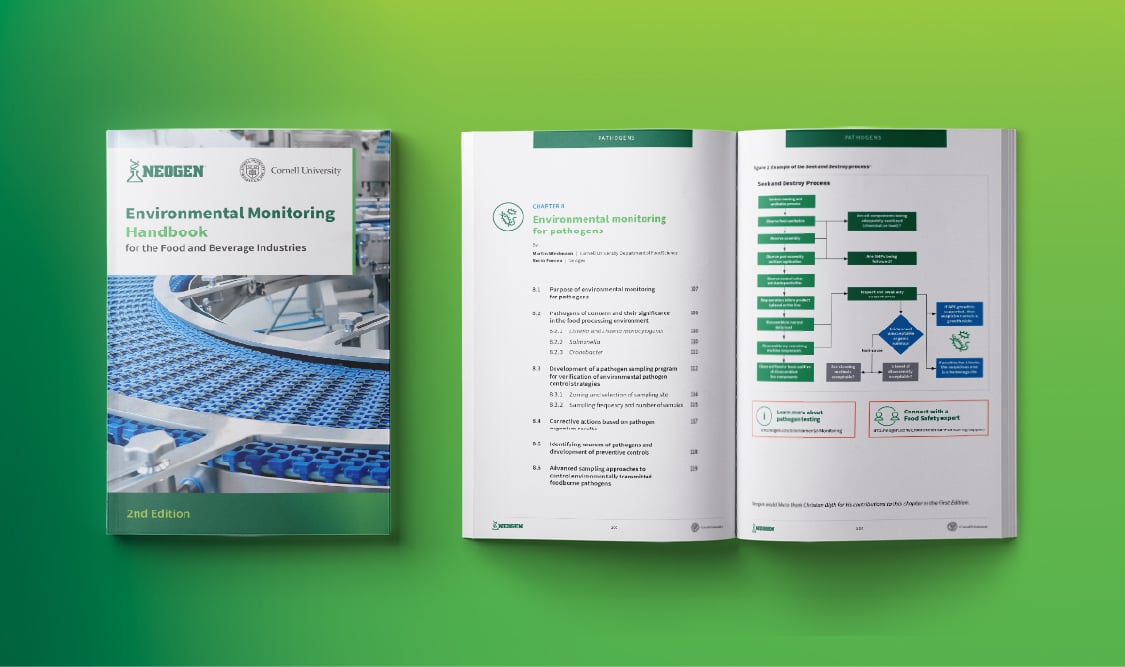 Ready to elevate your environmental monitoring program? Download the 2nd Edition Neogen® Environmental Monitoring Handbook and discover why food safety professionals like Mónica Morales consider it a valuable resource for strengthening environmental monitoring programs.
Download
Category: Food Safety, Food & Beverage, Environmental Monitoring