ISO 24914:2026 – A New International Standard for LAMP Technology in Food Safety Testing
July 07, 2026

What is ISO 24914:2026?
ISO 24914:2026 is the first international ISO standard defining how Loop‑Mediated Isothermal Amplification (LAMP) can be applied for microorganism detection across the food chain. The standard provides general requirements and guidance for the development and application of LAMP method to detect microorganisms and associated genetic markers (e.g. antimicrobial resistance genes, virulence genes). (1)
The standard applies to:
- products intended for human consumption
- products for feeding animals
- environmental samples in the area of food and feed production and handling
- samples from the primary production stage for the above items
LAMP vs Polymerase Chain Reaction (PCR)
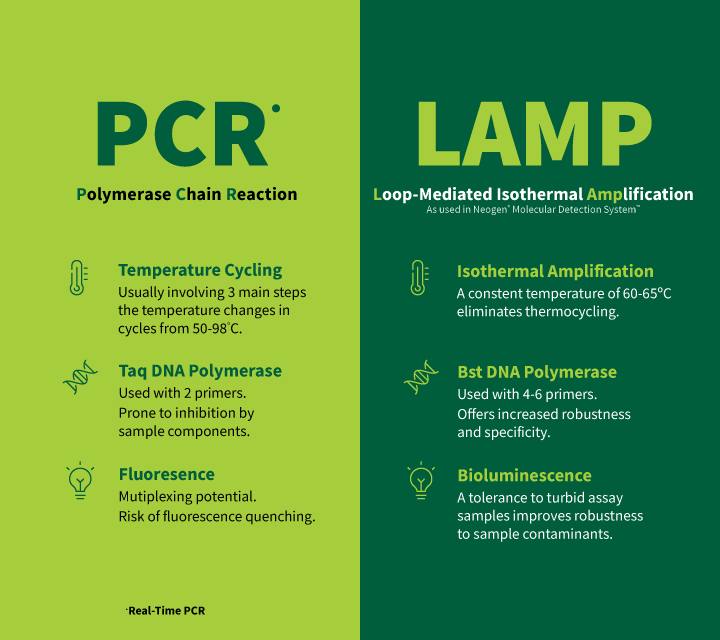
As the name suggests, Loop-mediated isothermal amplification (LAMP) technology works at a constant temperature of 60-65°C. Using strand-displacing Bacillus stearothermophilus (Bst) DNA polymerase and four to six primers, the technology allows for specific and continuous DNA replication.
The inherent strand displacement capability of the polymerase used in LAMP, means it can denature the DNA and continuously amplify DNA without a temperature change, unlike PCR.
While LAMP technology was first documented in 2000, isothermal amplification technologies were fairly slow to gain popularity due to long-standing alternatives such as PCR. Interest in the technology grew rapidly from around 2005 when studies increased, and the advantages of LAMP vs PCR became more apparent.
Traditional PCR technology uses two primers and a non-strand-displacing Thermus aquaticus (Taq) DNA polymerase that requires thermocycling. Taq Polymerase can be prone to inhibition, and an internal amplification control (IAC) is needed to manage the limitations of inhibition susceptibility.
The Bst polymerase used in LAMP is generally considered more robust and less susceptible to inhibition than Taq polymerase. The new ISO standard recognizes the robustness of the LAMP methodology, which is not subject to the same limitations as PCR. Consequently, once the method has been appropriately validated and verified, the use of internal or external amplification control is not required for routine testing.
Why is ISO 24914:2026 Important for Food Safety Testing?
The release of ISO 24914:2026 is an extremely positive development in the food testing industry. Providing stronger recognition and credibility of LAMP technology, it equips food safety testers with the confidence to utilise a technology that offers many testing benefits.
ISO 24914:2026 allows laboratories to adopt LAMP with clear quality, performance and documentation expectations, helping to reduce process risks and increase comparability of results across multiple sites and organisations.
The release of the standard also facilitates the adoption of LAMP technology in accredited laboratories. The standardised procedures featured in the ISO simplify accreditation assessments and compliance, harmonising laboratory practices and data management to ensure results are accurate and clearly reported. Auditors, regulators and customers can be reassured that LAMP results meet ISO expectations.
Neogen® Application of LAMP Technology
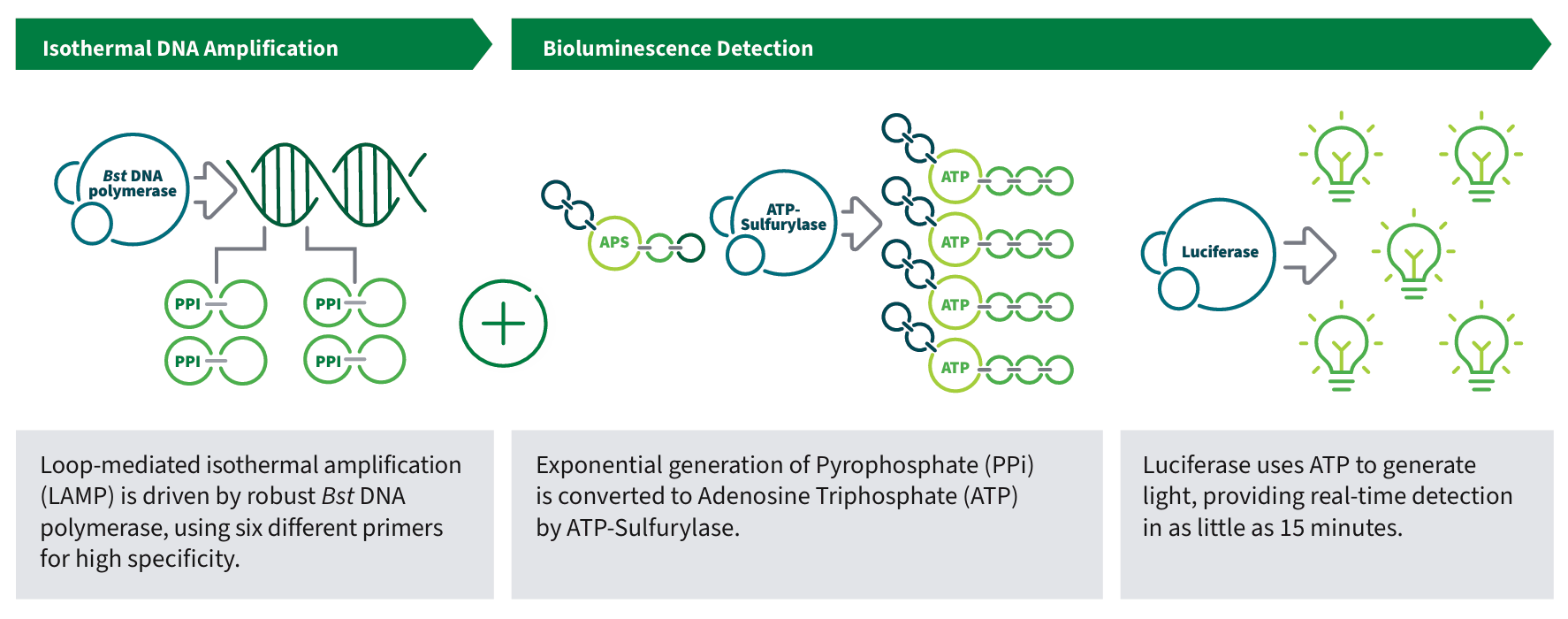
Identifying the benefits the technology could bring, Neogen was an early adopter of LAMP technology and developed the Molecular Detection System (MDS) to provide rapid and robust pathogen testing that eliminates the need for thermocycling while building trust and confidence.
ISO 24914:2026 provides the industry with a recognized benchmark for quality that our MDS testing solution aligns with, meaning that in addition to providing speed, simplicity and accuracy, our MDS solution offers ISO 16140-2 validated test methods and support you with achieving ISO compliance. See individual MDS product pages for details on validations.
Key Takeaways and ISO 24914:2026 Frequently Asked Questions
What types of samples does ISO 24914:2026 apply to?
The standard applies to products intended for human consumption, animal feed, environmental samples in food and feed production areas, and samples from primary production stages. (1)
Is LAMP an ISO-recognised method for food safety testing?
Yes. ISO 24914:2026 formally recognises LAMP as an acceptable molecular method for detecting microorganisms and associated genetic markers.
How does LAMP differ from PCR in food safety testing?
LAMP operates at a constant temperature using strand-displacing DNA polymerase, eliminating the need for thermocycling. This allows rapid amplification, improved robustness to inhibitors, and simplified workflows compared with traditional PCR methods.
Does ISO 24914:2026 replace PCR-based standards?
No. ISO 24914:2026 does not replace PCR standards; instead, it provides a harmonised framework for laboratories wishing to apply LAMP alongside or as an alternative to PCR where appropriate.
Can accredited laboratories use LAMP under ISO 24914:2026?
Yes. The standard supports the adoption of LAMP in accredited laboratories by defining clear quality, performance, and documentation requirements that simplify accreditation assessments and compliance.
Why is ISO 24914:2026 important for food safety laboratories?
ISO 24914:2026 improves confidence in LAMP‑based testing by harmonising laboratory practices, increasing result comparability, and providing clarity for auditors, regulators, and customers.
References:
1. ISO 24914:2026 Microbiology of the food chain — Loop-mediated isothermal amplification (LAMP) for the detection of microorganisms and associated genetic markers — General requirements and definitions

Category: Food Safety